How Composure Actually Helped Me, 3 Real Moments
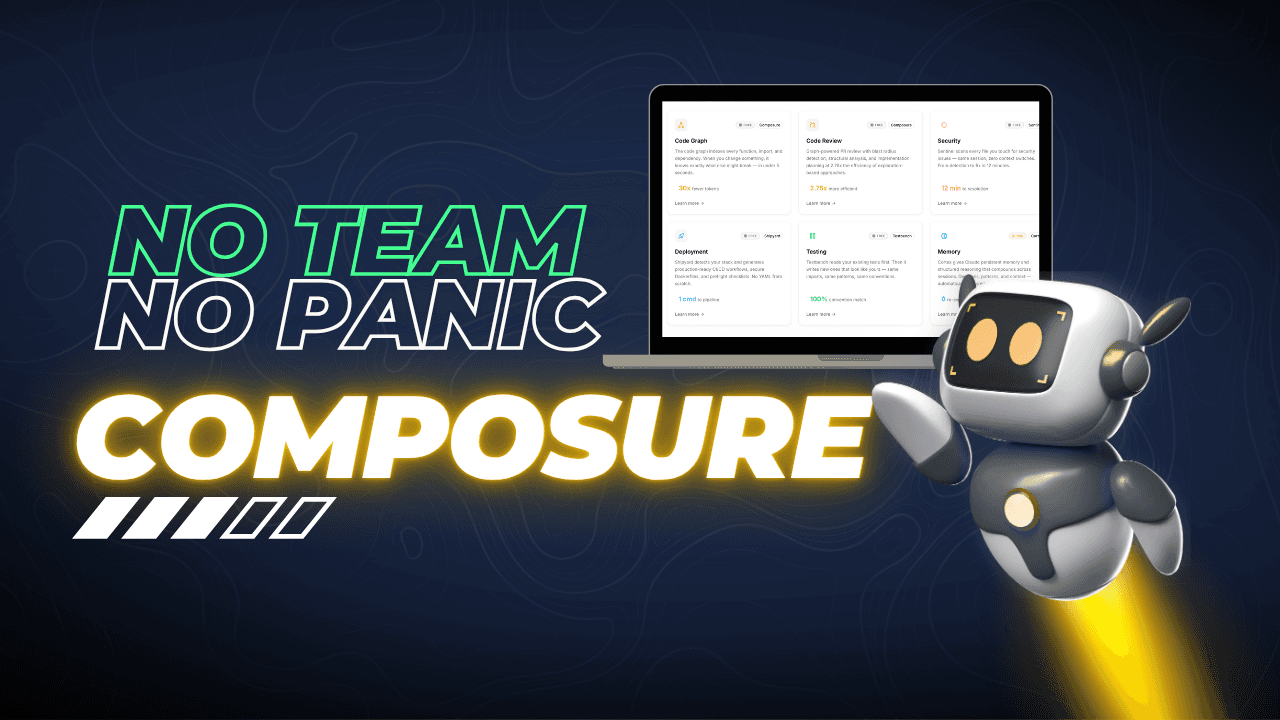
I didn't know what I didn't know, until I left the Squarespace safety net and started building on my own. Three real moments with Composure showed me exactly how much I was missing, and why building without a second set of eyes is building on quicksand.
I knew I was missing things. I just didn't know what I was missing.
That's where I was when I moved off Squarespace and started building my own sites. On Squarespace, security and all the behind-the-scenes stuff was done for me... out on my own, that safety net was gone.
I actually met Helder (@hrconsult), the creator of Composure, on Threads. He saw what I was building and offered up his tool to help me out... and it's become a big part of how I built what I have today.
AI Is the Builder. Composure Is the Manager.
Composure is a product that lives inside the AI you build with. The way I think about it: AI is a great builder, and Composure is a good manager. The builder can put up walls fast... the manager makes sure the builder has the correct specs, so what goes up doesn't fall down later.
It knows how to run security checks, testing, and code organization the right way, and it's automatic. When you know you need something like a security check, you run it right there... and you can actually feel better afterward, because it's not generic AI deciding we think this looks good. It's real guidelines for what good actually is.
Moment 1: The Proofreader That Wasn't Proofreading
First, a term I didn't know when this happened: tech debt. It's all the small shortcuts and hidden mistakes that pile up while you build. The way I understand it now... it's like building a bridge when you don't know how to build a bridge. It might look great. It might even work under a light load. But the minute anything outside of normal happens... a traffic spike, a bot, someone trying to make a payment... that's when you find out how bad it is.
One of the tools in my project is called a linter... basically an automatic proofreader for code. What I didn't know was that mine had been broken for a while. A bad update crashed it, so nothing was proofreading anything... and everything looked fine on the surface.
I ran Composure's backlog cleanup and it caught the broken proofreader, fixed it, and then 30 issues surfaced in one sweep. It also broke 11 oversized files down into pieces that are easier to maintain.
I wasn't even annoyed it had been broken. I was happy it found it, because I never would have... I didn't even know anything was wrong. And realistically, without something like this I wouldn't have kept building on my own. There's so much I don't know, and security is very important to me and I love organization... this product hits both of those perfectly.
Moment 2: Hardening the Site That Takes Real Money
My site processes real payments through Stripe. "Hardening" was another word I had to learn... it just means finding the doors an attacker could walk through and closing them, one by one.
Composure turned a security audit into an actual plan, and two things from that session stuck with me. My payment code had zero automated tests. Nothing was standing guard over the part of the site that handles money... that session shipped the first real tests this site ever had, and they run on the checkout, the newsletter signup, and the payment confirmation. It also locked down things I didn't even know existed, like making sure other websites can't embed my pages inside a hidden frame to trick visitors.
And look, money is important... but it's not even just about the money. It's the customer experience. If something goes sideways during a payment, now I'm walking a customer through a problem I could have prevented. That's a bad look.
Moment 3: The Hole I Never Would Have Seen
Just recently I ran Composure's security scan on my dashboard project. Almost everything came back clean, which felt good on its own... but it flagged one of my automation scripts. There was a spot where an attacker could have slipped their own commands in through a simple text field. I didn't know that was even possible. I never would have caught it by looking.
What I like is that it doesn't just flag things... it tells me the why. A security check on another project found that a login wasn't rate limited, and instead of a cryptic warning it explained it: a bad actor could sit there guessing passwords all day, so the fix locks them out after a handful of failed tries. When something explains the why like that, I actually learn from it... and the next time I'm building, I know to ask about it.
If you have ADHD, you might already know this next part. I build in a very linear way... I have a checklist, and if I find inconsistencies, bugs, or just problems, I need to fix them (or at least know the plan) before I can really move on. Building on top of a known problem doesn't work for me.
It's Not Blind Trust. It's a Map.
Depending on how versed you are in AI, you already know it's not always right. That's been said a thousand times... but we still start trusting things anyway. I question everything, so this setup works for me: you're not blind trusting, you're giving a map to your AI.
If you take away one thing, it's that this can save you a lot of time and a lot of heartache. When you build something with a hidden bug in it, you're not gonna know until the problem happens... and by then you've built everything on quicksand and didn't know it. It's great to have something in your back pocket that checks you, and helps you build in a way where you can feel safe and secure.
Real talk: Helder's a friend, and I'm also an affiliate now... if you sign up through my link, I may earn something from it. But I was using Composure and talking about it long before that was true. Nobody scripted this... I just know what it caught for me.
What's your take?
Agree, disagree, been there... leave it here. No account or email needed, just a name. I read every one before it posts.